Our story
From spent grounds
to something worth keeping.
Every piece starts the same way — as waste. This is the journey from a café's trash bin to a finished piece of leather, one batch at a time.

"I kept thinking about how much good coffee gets thrown away every single day — not the drink, the grounds. So I started asking cafés if I could take theirs instead."
The process
Six steps,
one transformation.
It takes patience to turn waste into material. Here's what that actually looks like, week to week.
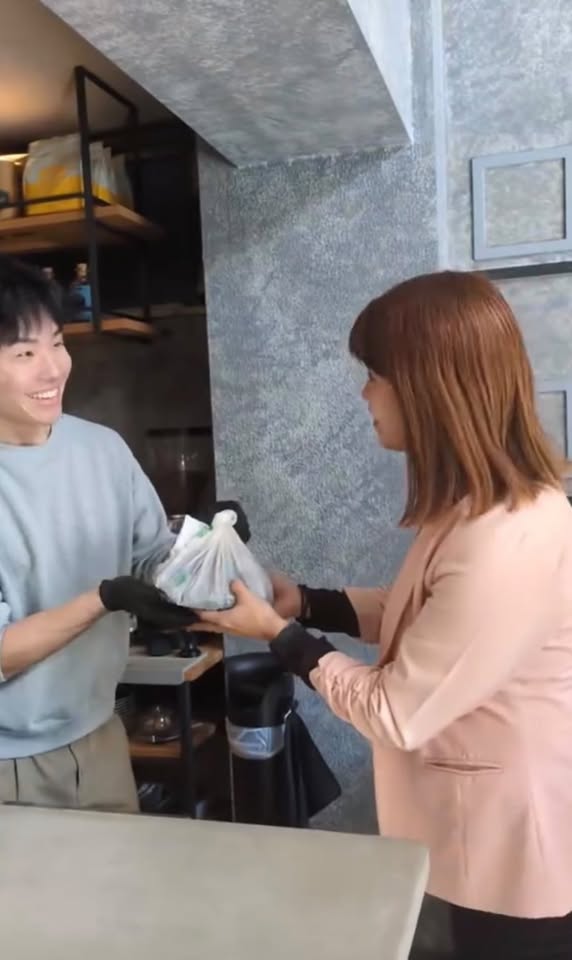
Step one
Collecting the grounds
It starts at the counter of a local café, picking up bags of spent grounds that would otherwise go straight into the bin. What's waste to them becomes raw material for us — no cost, no new resources, just rerouting something that already exists.
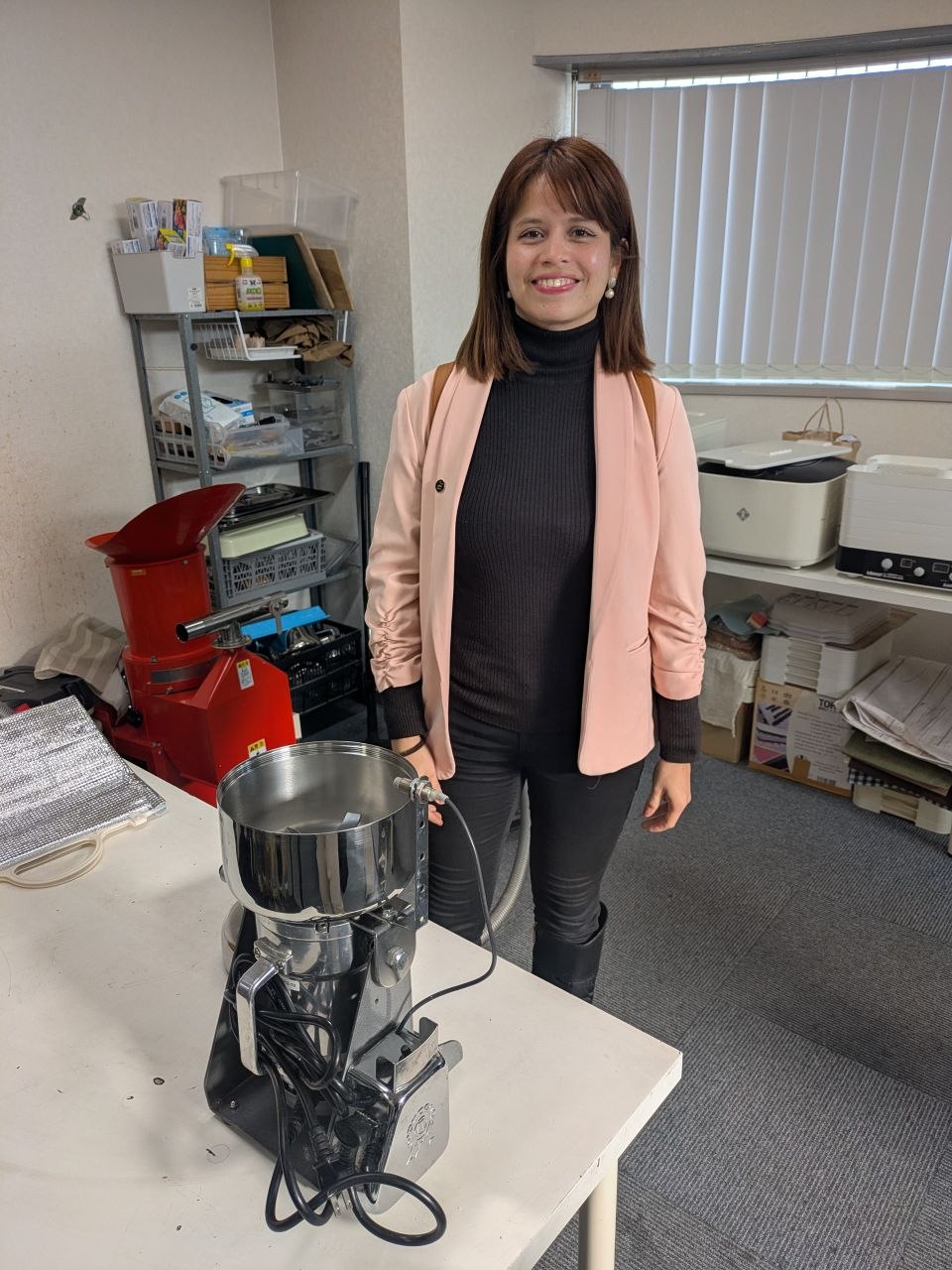
Step two
Drying and grinding
The wet grounds are dried out completely, then ground down into a fine, even powder. This is the part nobody sees in the finished product, but it's where consistency is won or lost — too coarse, and the leather won't hold together.
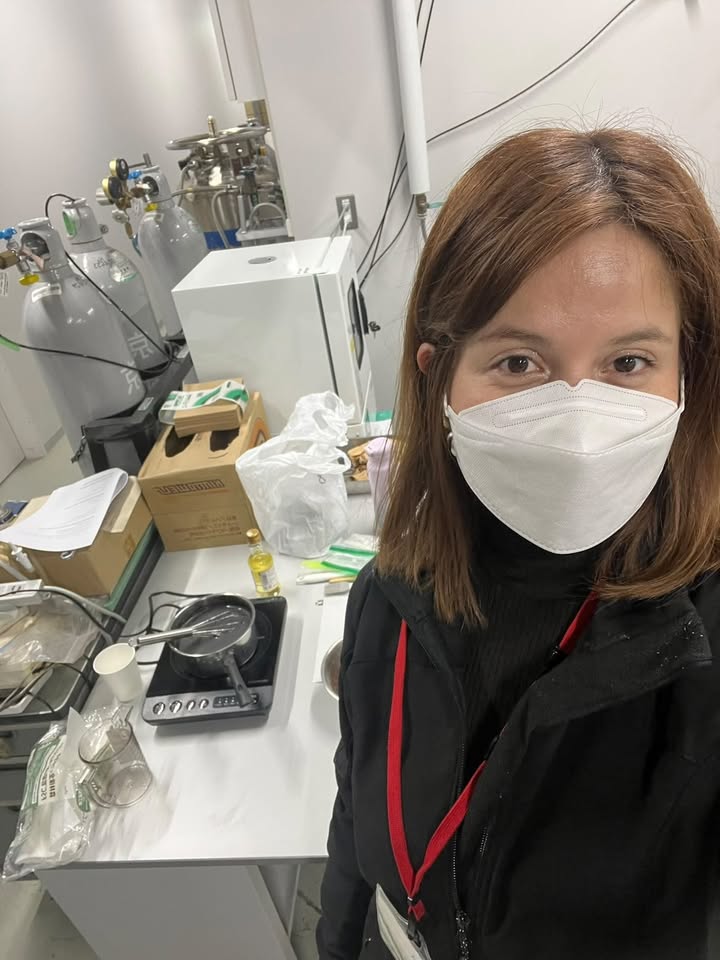
Step three
Mixing the formula
The coffee powder is blended with plant-based binders, heated and whisked into a smooth, workable mixture. Every batch is measured by hand — small adjustments in heat and ratio change the texture of the final leather entirely.
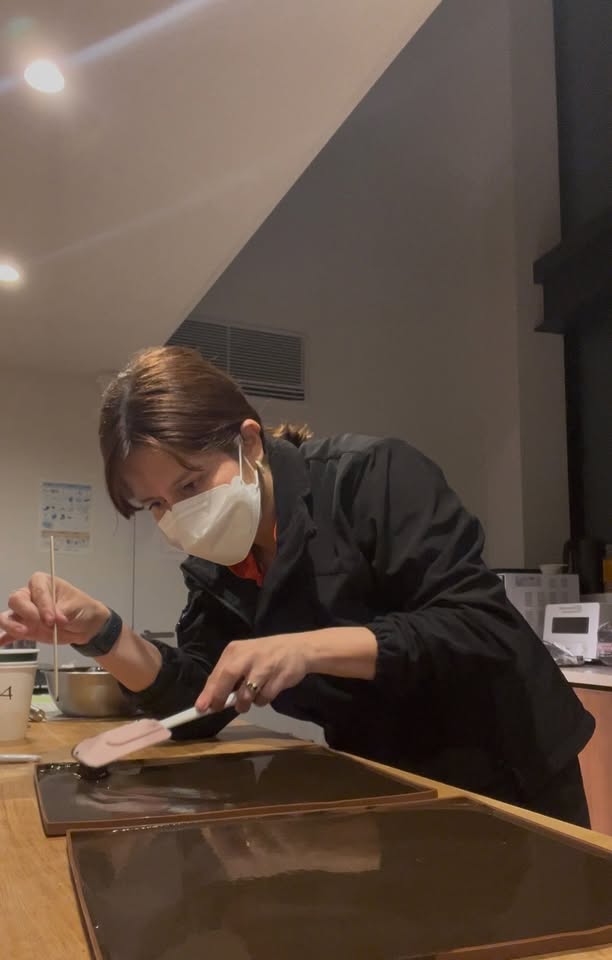
Step four
Coating, by hand
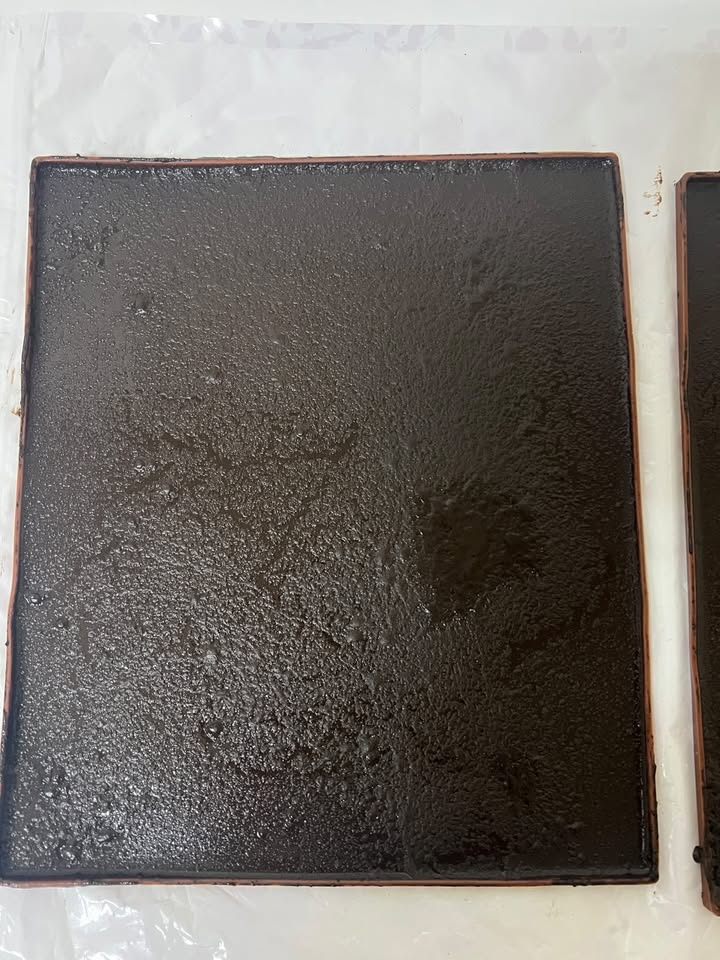
The mixture is spread across the casting boards in even layers, coat by coat. It's slow, deliberate work — there's no machine doing this part. Each pass has to be smooth enough to dry without cracking.
Step five
Curing into leather
Once coated, the sheets cure and set over several days. What goes in as a dark, wet mixture comes out as something stable, flexible, and unmistakably leather — just without a single animal involved.
Step six
Cut, crafted, finished
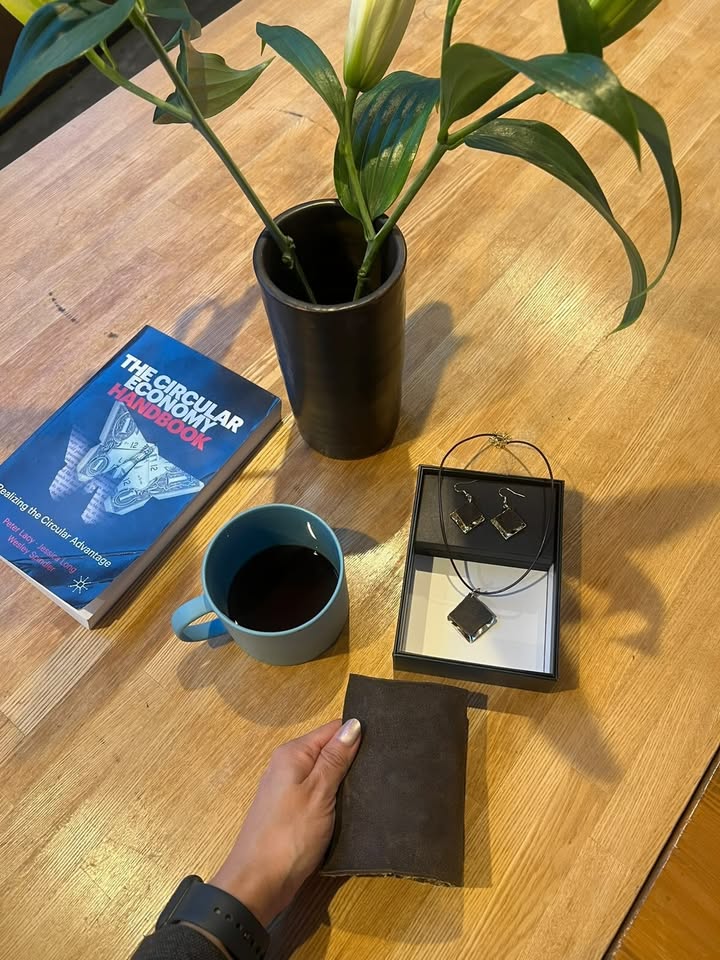
From cured sheets to earrings, straps, and wallets — each piece is cut and finished by hand. What began as a café's waste ends up as something someone chooses to wear, every single day.
Why it matters